Regarding the brake bleed, this is what I’ve found:
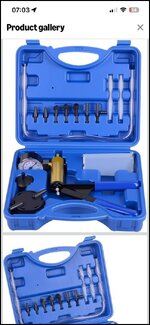
When you flush the system, the fresh fluid will still push through the open physical channels of the block manually, but the stagnant fluid trapped directly inside the dead pump circuit cannot be actively purged by software. Many UKGSer members facing this exact scenario simply perform a thorough traditional manual bleed (or use a vacuum bleeder) to clear out the lines and calipers, accepting that the inactive module block will hold a small pocket of old fluid until the motor is either repaired or left as-is, since the core safety-critical braking path remains entirely mechanical and direct.
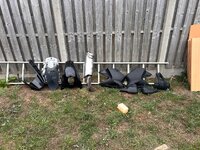
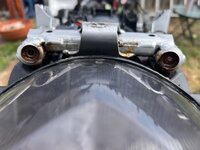
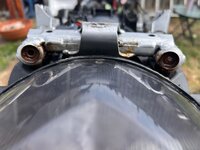
Also, tried taking the headers off. The nuts at the headers came off without a fight! Yay!
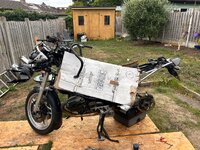
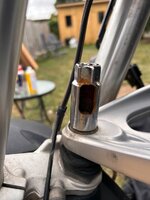
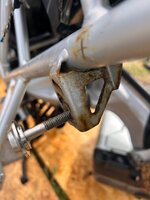
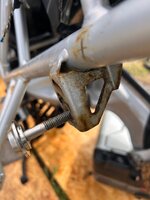
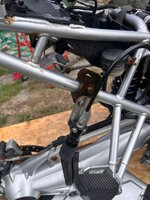
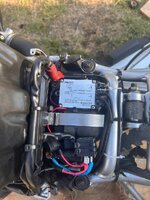
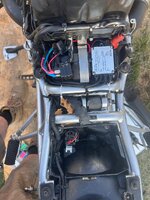
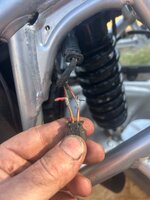
The whole thing is still supported by a bracket somewhere under the shock and seems next to impossible to get to. Maybe it’ll be easier to access when I’ve the rear shock off. My brain is telling me to just leave it where it is. It’s a heavy unit.
When you flush the system, the fresh fluid will still push through the open physical channels of the block manually, but the stagnant fluid trapped directly inside the dead pump circuit cannot be actively purged by software. Many UKGSer members facing this exact scenario simply perform a thorough traditional manual bleed (or use a vacuum bleeder) to clear out the lines and calipers, accepting that the inactive module block will hold a small pocket of old fluid until the motor is either repaired or left as-is, since the core safety-critical braking path remains entirely mechanical and direct.
Also, tried taking the headers off. The nuts at the headers came off without a fight! Yay!
The whole thing is still supported by a bracket somewhere under the shock and seems next to impossible to get to. Maybe it’ll be easier to access when I’ve the rear shock off. My brain is telling me to just leave it where it is. It’s a heavy unit.