Submarine GS

Agree with Greg, don't go pulling too much apart yet. Set your valve clearances correctly when cold (I hope they haven't changed due to any 'hydraulic' effects.)

I'd try some inexpensive 10W40 like ASDA semi-synth for about £16 (as its a thinner oil than the recommended 20W50 and easier to get hold of) and a new oil filter.

Good device regarding electrics. Pull all wiring connectors and WD40 them to displace water.

Run the bugger on the centre stand until hot enough for the oil cooler under the beak to go hot so you know the oil thermostat has opened and flushed out the oil cooler. Don't ride it yet as any emulsified 'soup' in the sump may not provide good lubrication or scuffing protection when under load.

Dump the oil and refill.

Might be an idea to also consider flushing the brake fluid if the reservoirs went under water, boiling brakes is no laughing matter.
 
I know a mate who ended up in a dyke on his dads superdream 250 :D it was a good laughing point for a long time,remember seeing it with headlight half filled with nice smelly water :green gri

Hope you get yours sorted
 
Agree with Greg, don't go pulling too much apart yet. Set your valve clearances correctly when cold (I hope they haven't changed due to any 'hydraulic' effects.)

I'd try some inexpensive 10W40 like ASDA semi-synth for about £16 (as its a thinner oil than the recommended 20W50 and easier to get hold of) and a new oil filter.

Good device regarding electrics. Pull all wiring connectors and WD40 them to displace water.

Run the bugger on the centre stand until hot enough for the oil cooler under the beak to go hot so you know the oil thermostat has opened and flushed out the oil cooler. Don't ride it yet as any emulsified 'soup' in the sump may not provide good lubrication or scuffing protection when under load.

Dump the oil and refill.

Might be an idea to also consider flushing the brake fluid if the reservoirs went under water, boiling brakes is no laughing matter.

What you mean Inexpensive at £16!,
I am running euro car parts finest semi syth at £14, with a oem filter:thumby:
I will be dumping the oil though after/If I've got it running right again.:clap

Got the throttle bodys off and all looks clean in the intakes, airbox is clean after the restart as well, I would imagine any watery oil would accumilate there.
 
Ahhhh Strata Florida .... Happy days .... :D


Hope you get it fixed .... :thumb2
 
I will be dumping the oil though after/If I've got it running right again.:clap

If you're pumping watered oil around the oil circuit, it will feck things sooner than you know.

In all this, the ONLY thing that has changed is that you have got water where water shouldn't be. Your only objective should be to remove that water - then it should run as it did before.

The fueling/air side will sort itself out when you take the bike for a decent run. But you MUST sort the oil out first!
 
Hey Hey Calm down Calm down,
I rode it back 80 miles after dunking it,(yes i should not have started and had it recovered but thats to easy) droppped the oil as soon as i got back the oil was a black with a tint of grey:barf,
It has had clean oil and new filter and all the shit cleaned out before I fired it again,
it WILL have a another fresh load before I ride it,im trying to borrow a camera to poke up into the sump to see if theres a shite in there:thumby:
If you're pumping watered oil around the oil circuit, it will feck things sooner than you know.

In all this, the ONLY thing that has changed is that you have got water where water shouldn't be. Your only objective should be to remove that water - then it should run as it did before.

The fueling/air side will sort itself out when you take the bike for a decent run. But you MUST sort the oil out first!
 
It might also be an idea to WD40 the starter motor to prevent internal corrosion after reading Bendy Toys starter strip thread with reports of badly corroded brush holders etc.
 
It might also be an idea to WD40 the starter motor to prevent internal corrosion after reading Bendy Toys starter strip thread with reports of badly corroded brush holders etc.

Absolutely. All you need to do is remove the two (long) hex head bolts on the motor back end and the rotor will withdraw along with brush carrier.

The alternator will benefit from lots of dewatering spray.

It might even be worth pulling off the alternator belt cover and engine front cover. Oil drained first of course. ;).

An oil pressure gauge would be a handy addition. You'll need an adaptor tee at the pressure switch. The oil pressure is not high so a silicone oil hose could be taken under the tank to connect the pressure sensor.
 
The greatest risk when an engine (car or bike) goes into water whilst running is that the water will fill the cylinders and therefore cause damage by hydraulicing. I have seen con rods bent double by the immense pressure generated. Simplest test would be to measure just how far the pistons come in the pots. If you don't have a dial gauge for this then a thin screwdriver would do. Compare yours to a known good engine. Once you know that there is no damage to the rods then you can continue cleaning up. Messing around with oils etc is a waste of time if the lump needs major repairs.

John
 
The greatest risk when an engine (car or bike) goes into water whilst running is that the water will fill the cylinders and therefore cause damage by hydraulicing. I have seen con rods bent double by the immense pressure generated. Simplest test would be to measure just how far the pistons come in the pots. If you don't have a dial gauge for this then a thin screwdriver would do. Compare yours to a known good engine. Once you know that there is no damage to the rods then you can continue cleaning up. Messing around with oils etc is a waste of time if the lump needs major repairs.

John

It can't be that bad - he rode it 80 miles home!
 
It can't be that bad - he rode it 80 miles home!

During my years running a garage I had several cars driven in that had poor running due to water damage. I had one diesel van where two rods had been bent double, it still ran, albeit badly! So the fact he rode it home proves nothing. I still say that testing for such problems should be the first thing. It really is easy and if there is a problem no amount of cleaning and refilling with oil will solve it and is just a waste of time and money.

John
 
The greatest risk when an engine (car or bike) goes into water whilst running is that the water will fill the cylinders and therefore cause damage by hydraulicing. I have seen con rods bent double by the immense pressure generated. Simplest test would be to measure just how far the pistons come in the pots. If you don't have a dial gauge for this then a thin screwdriver would do. Compare yours to a known good engine. Once you know that there is no damage to the rods then you can continue cleaning up. Messing around with oils etc is a waste of time if the lump needs major repairs.

John

I agree with checking damage to the con rods, piston height at TDC is vital..
 
I agree with checking damage to the con rods, piston height at TDC is vital..

Agree ... I run a Mercedes- Benz dealer and I have seen it on a S Class diesel that hydraulic locked , we rebuilt it and it ran fine warm, misfired when cold and 2 con rods turned out to bent when the took the heads off and measured the pistons at TDC !
 
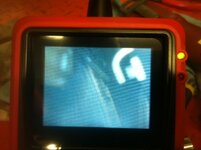
Borrowed a camera to look in the sump etc see if theres any mayo left.:thumb2

Further to the comments about bent con rods and cranks - The camera with a 90 degree mirror at the business end, should be able to see the normal piston top position on the cylinder wall. Looking into the engine via the front cover might allow you to see the con rods. But a screwdriver down the spark plug will give a rough idea. DTI is the best method.

Diesels don't have a throttle valve so ingested water is usually terminal. Petrol engines with throttle valve will ingest less water so can get away without mechanical damage.

Some engines can crease a big end shell bearing when cam belts fail and valves hit pistons. If the piston height looks ok it doesn't mean the big end shells are both ok. Oil pressure readings might indicate but stripping the engine would be the only sure way to know.
 
So I did the valves and rocker end float changed the plugs and petrol, had a look inside with the camera, sorry about photo quality but taken with my phone,
this is looking from the bottom plug hole with the exhaust valves open,
inside pic.JPG

started it up and it sounds sweet now although a bit cam chainy, may have been a little like that before to be honest, let it idle for 10mins or so to get it up to temp to drop the oil, took the filler cap of and steam was coming out,noticed then that the temperature of the engine was very hot, dropped the oil and a bit of water came out first, the oil was that hot it softend the oil tray:eek:
here,s the oil,
photo.JPG
 
Was the oil cooler fully hot? Maybe it was just lack of airflow leading to overheating.

How do the piston top dead centre heights compare L & R?
 
I just hope the ticking noise isn't small-end noise due to a bent rod.

Seen/heard it on a mates Daytona T595 which threw a rod, thankfully at low speed whilst riding. We thought it was tappets/camchain noise. Turns out that if dropped on left side on those Triumph engines, the sump oil flows into the air box via the crank breather hose. When stood up the oil then flows into whichever pots inlet valves are open resulting in hydraulic damage. A previous owner had dropped his bike at some point (epoxy repair to the left crankcase).

That oil in the tray looks like a science experiment !
 
Unless you have an airflow over the engine (fan) don't let it run for more than a couple of minutes. You may end up causing more/different problems associated with wiring or electrical components.

End-scoping piston positions will not be an accurate enough measurement as it only takes a couple of thou reduction to knacker the engine.


Back
Top Bottom