Final Drive woes - workable or replacement and if so: which?

It does not matter what viscosity of oil what does matter is the specification

BMW transmissions require GL5 specification

Cleverer people than I will come along and tell us all the ins and outs but basically GL4 or GL4/5 hybrid does not have the correct shear strength to protect the drive gears

What Is GL4?​


The designation of the GL4 oil is automotive that uses hypoid or spiral bevel gears. The vehicles have moderate speeds and loads for this utility to perform optimally. Depending on the oil brand, some may work with smaller vehicles, while others are multipurpose, serving both smaller and heavy vehicles.

The target of GL4 is mainly manual gearboxes and transaxle use.

Gl4 vs. GL3; what is the difference? GL3 gear oil also serves spiral bevel gear systems, but it has a milder amount of EP additives than GL4. Can you use them interchangeably? You can use GL4 in GL3 systems to benefit from the former’s high load support and anti-wear capability.


What Is GL5? ...​

clear as mud three castrol GL5 fluids recco'd by BMW motorrad (in brackets what I think they mean)​

(gearbox)

(bevel)

(used by dealers)


Flipping the coin of this discussion, we bring you the GL5 gear oil. It has an extreme pressure rating, which is one of the reasons behind its preference for high-speed and high-load applications. Its target is mainly hypoid gear in automotive axles.

You may consider the GL5 a GL4 gear oil equivalent, though on a larger scale. You can use it as a replacement for GL4, as they have similar qualities. Gl5 vs. GL6 is another crucial comparison point. The GL6 is ideal for vehicles with high pinion offset hypoid gears, like those in limited-slip differentials.

The MIL-PRF-2105E is a military-grade GL5 released sometime in the mid-1990s. It is mainly for use on military vehicles.


Gl4 vs. Gl5 Differences​


The main difference between GL4 and GL5 is that the former has more additives to boost its extreme pressure. The additives, in this case, are phosphorous and sulfur compounds. They help by providing a sacrificial layer on the gear surfaces to reduce their degradation rate.

The other contrasting point is their use, with the GL4 being suitable for severe hypoid gear service without the shock loading factor. On the other hand, you use the GL5 for high-service hypoid gear with shock loads. Plus, it is not for use on the gearbox. GL4 and GL5 work in high-pressure conditions, though the latter has a high affinity to extreme-pressure surroundings.
 
Last edited:
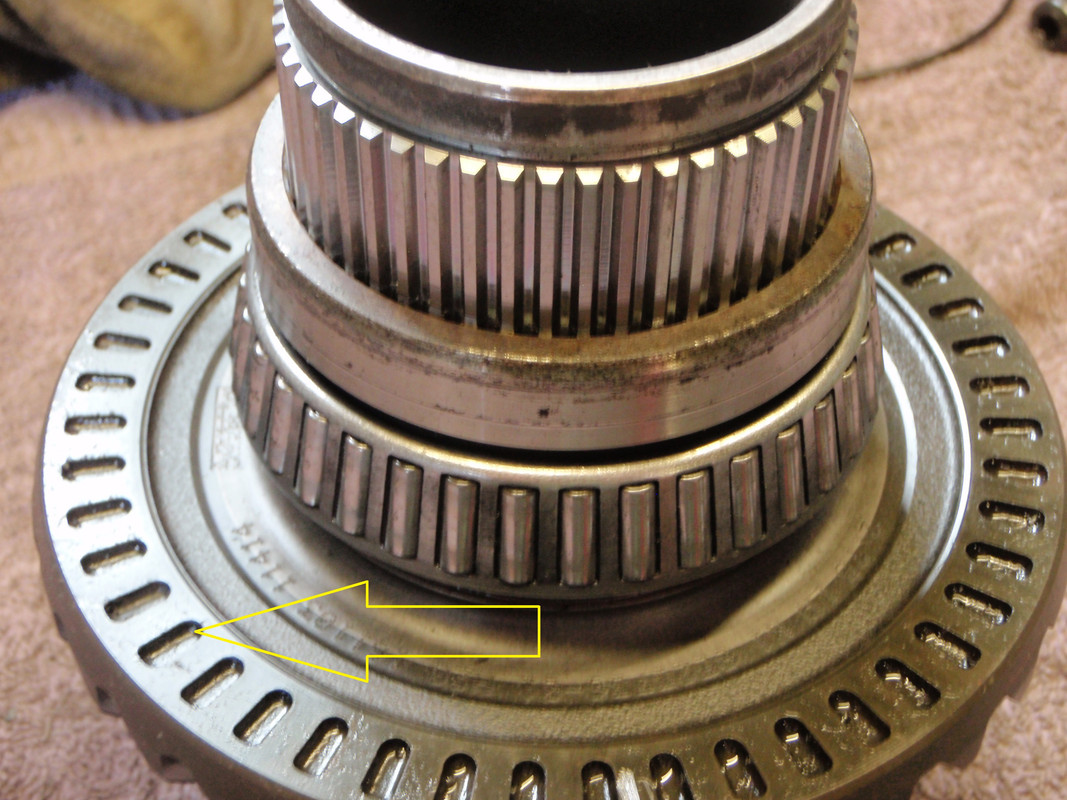
I would check that the different ratios / crown wheels have the same tone ring (cut into the crown wheel) as this will effect the ABS / Traction control if fitted.
Think I read earlier in the post that this unit has a breather on it.
His search for replacement will be a lot easier if this is the case .
2005 to 2006 unicorn poo,2006 to 2008 some variables to consider,2008 to 2009 easier , 2009 on just ratios that differ
 
Think I read earlier in the post that this unit has a breather on it.
His search for replacement will be a lot easier if this is the case .
2005 to 2006 unicorn poo,2006 to 2008 some variables to consider,2008 to 2009 easier , 2009 on just ratios that differ
Unfortunately not, non-vented. Unless I've read wrong it looks like I can still "upgrade" to a vented FD thought - but do correct if wrong.
 

What Is GL4?​


The designation of the GL4 oil is automotive that uses hypoid or spiral bevel gears. The vehicles have moderate speeds and loads for this utility to perform optimally. Depending on the oil brand, some may work with smaller vehicles, while others are multipurpose, serving both smaller and heavy vehicles.

The target of GL4 is mainly manual gearboxes and transaxle use.

Gl4 vs. GL3; what is the difference? GL3 gear oil also serves spiral bevel gear systems, but it has a milder amount of EP additives than GL4. Can you use them interchangeably? You can use GL4 in GL3 systems to benefit from the former’s high load support and anti-wear capability.


What Is GL5? ...​

clear as mud three castrol GL5 fluids recco'd by BMW motorrad (in brackets what I think they mean)​

(gearbox)

(bevel)

(used by dealers)


Flipping the coin of this discussion, we bring you the GL5 gear oil. It has an extreme pressure rating, which is one of the reasons behind its preference for high-speed and high-load applications. Its target is mainly hypoid gear in automotive axles.

You may consider the GL5 a GL4 gear oil equivalent, though on a larger scale. You can use it as a replacement for GL4, as they have similar qualities. Gl5 vs. GL6 is another crucial comparison point. The GL6 is ideal for vehicles with high pinion offset hypoid gears, like those in limited-slip differentials.

The MIL-PRF-2105E is a military-grade GL5 released sometime in the mid-1990s. It is mainly for use on military vehicles.


Gl4 vs. Gl5 Differences​


The main difference between GL4 and GL5 is that the former has more additives to boost its extreme pressure. The additives, in this case, are phosphorous and sulfur compounds. They help by providing a sacrificial layer on the gear surfaces to reduce their degradation rate.

The other contrasting point is their use, with the GL4 being suitable for severe hypoid gear service without the shock loading factor. On the other hand, you use the GL5 for high-service hypoid gear with shock loads. Plus, it is not for use on the gearbox. GL4 and GL5 work in high-pressure conditions, though the latter has a high affinity to extreme-pressure surroundings.
So am I to take it that my choice of Putoline was....less than ideal and I should've gone with Castrol? :)
 
Listen to me VERY Carefully, It does NOT matter IF it is castrol or Plutoline or Comma oils

As Long as it is GL5 Spec End of Conversation (y)

From what I can read it's GL-4/5 so should be fine, so I'll still get use out of the new bottle sat on my shelf!

Appreciate the input, everyone! on the verge of ordering a replacement, just ensuring my teeth match up as if so I should be good to go. Just trying to find out if there's any impactful differences with the ABS tone ring....or how to even tell!
 
I would stick with the same ratio and you should be ok.
I have used a vented (2010 to 2012) Final drive on a pre vented 2009 GS in the past but it had the same ratio.
The big advantage with the vented final drive is that the output bearing is in the oil bath.
 
Just in case it matters to you, if you use one from an RT not only will it be a different ratio but also may not have threaded hole for mounting the GS mudguard
 
Just in case it matters to you, if you use one from an RT not only will it be a different ratio but also may not have threaded hole for mounting the GS mudguard
Relevant, but for the first time ever I heard it called a "Hedgehog scraper" from the seller of the RT FD!

I do not, however, have a mudguard anyway, so this won't matter - I did debate fitting one before but it makes little difference, just need to get a brush out to clean the suspension!
 
A mudsling is much more effective in keeping some of the road crap off the back of the legs!
 
Just trying to find out if there's any impactful differences with the ABS tone ring....or how to even tell!
What you`re looking for is the number of cast-in `segments` in the circumference of the crown wheel, you can see (and count) them when you remove the ABS speed sensor and look through the hole.


Count the number on your original FD and ask the seller of the one you are intending to buy to do the same, hopefully they`ll be the same even if the ratio is different. If not it could affect the ABS/traction control, the speedo reading and the odometer count.

For what it`s worth when i changed my 1250GSA FD from a 2.91 32/11 to a 2.75 33/12 the crown wheels both had the same `segment` count. This was on a 1250 though, hopefully BMW have historically used a similar design on the earlier Hexheads like yours.
 
From what I can read it's GL-4/5 so should be fine,
NO!!!

As I said above GL4 - 5 Is NOT suitable

BUT however if you want to save a tenner for a litre of gear oil and FUBAR another FD? Go right on ahead !

Also a really good trick is not to use ultra thin fully synth but proper HGV Muck!

85W140 GL5 Hundred of bikes over here that I have serviced have that in their FDs

Failure rate was about every 25 to 30 K with 75W90 GL5 Fully synth

I started using the more viscose oil and basically I have not had a complaint of any sort of failure since! and that was in 10 years
 
It’ll be worth making sure that the input shaft has the same amount of splines as your drive shaft. I know a 2010 on has more than a pre 2008, but don’t know for a 2008 to 2010.
 
It’ll be worth making sure that the input shaft has the same amount of splines as your drive shaft. I know a 2010 on has more than a pre 2008, but don’t know for a 2008 to 2010.
So it would seem.
To potentially confuse the OP even more and add another level of complexity see here.
 
So folks, happy ending.

I picked up a 2013 FD, compatible with the ton ring and also spline. Ratio is 33/12 rather than 32/11, but works. Was even in better nick than my old one, no play and generally a better unit - also vented, so a welcome upgrade.

Technically I had some Putoline SP Gear left but figured for the sake of argument I'd get a bottle of Rockoil 75W-90 as it was honestly a matter of a few £ difference.

Finally got everything back together this afternoon, new O-rings on the ABS sensor and drain plug, also got some new stainless brake disk bolts to swap in (as old ones were in a bit of a sorry state) and got her out for a ride.

In love all over again, happy days. Swear there's some more nip in her step as well which is either my imagination, or the ratio difference. Rides smooth as silk again, happy camper.

My thanks to all you pitched in comments, advice etc - you're all awesome.
 
NO!!!

As I said above GL4 - 5 Is NOT suitable

BUT however if you want to save a tenner for a litre of gear oil and FUBAR another FD? Go right on ahead !

Also a really good trick is not to use ultra thin fully synth but proper HGV Muck!

85W140 GL5 Hundred of bikes over here that I have serviced have that in their FDs

Failure rate was about every 25 to 30 K with 75W90 GL5 Fully synth

I started using the more viscose oil and basically I have not had a complaint of any sort of failure since! and that was in 10 years

Now that's an interesting bit of info, anyone else use the 85W140, I swap the oil out every year whether she likes it or not but with the 75W90 etc. Quick question would this be better in the 1200 gearbox as well as the FD?


Back
Top Bottom