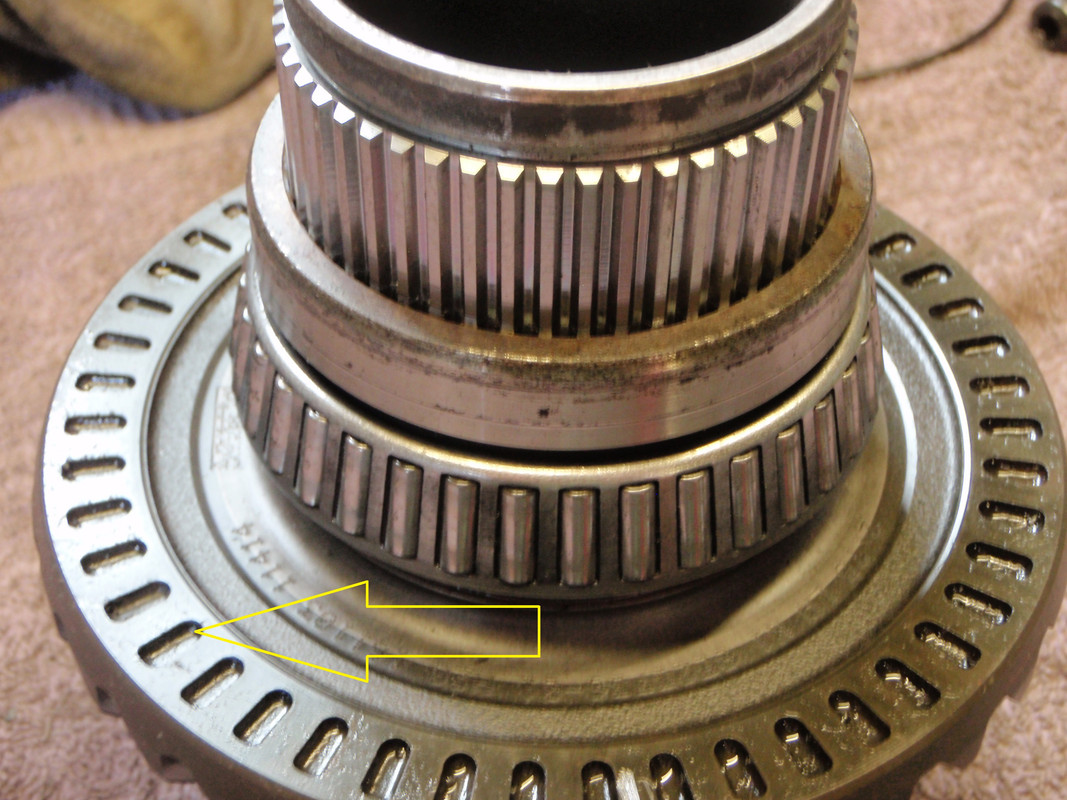
It does not matter what viscosity of oil what does matter is the specification
BMW transmissions require GL5 specification
Cleverer people than I will come along and tell us all the ins and outs but basically GL4 or GL4/5 hybrid does not have the correct shear strength to protect the drive gears
What Is GL4?
The designation of the GL4 oil is automotive that uses hypoid or spiral bevel gears. The vehicles have moderate speeds and loads for this utility to perform optimally. Depending on the oil brand, some may work with smaller vehicles, while others are multipurpose, serving both smaller and heavy vehicles.
The target of GL4 is mainly manual gearboxes and transaxle use.
Gl4 vs. GL3; what is the difference? GL3 gear oil also serves spiral bevel gear systems, but it has a milder amount of EP additives than GL4. Can you use them interchangeably? You can use GL4 in GL3 systems to benefit from the former’s high load support and anti-wear capability.
What Is GL5? ...
clear as mud three castrol GL5 fluids recco'd by BMW motorrad (in brackets what I think they mean)
(gearbox)(bevel)
(used by dealers)
Flipping the coin of this discussion, we bring you the GL5 gear oil. It has an extreme pressure rating, which is one of the reasons behind its preference for high-speed and high-load applications. Its target is mainly hypoid gear in automotive axles.
You may consider the GL5 a GL4 gear oil equivalent, though on a larger scale. You can use it as a replacement for GL4, as they have similar qualities. Gl5 vs. GL6 is another crucial comparison point. The GL6 is ideal for vehicles with high pinion offset hypoid gears, like those in limited-slip differentials.
The MIL-PRF-2105E is a military-grade GL5 released sometime in the mid-1990s. It is mainly for use on military vehicles.
Gl4 vs. Gl5 Differences
The main difference between GL4 and GL5 is that the former has more additives to boost its extreme pressure. The additives, in this case, are phosphorous and sulfur compounds. They help by providing a sacrificial layer on the gear surfaces to reduce their degradation rate.
The other contrasting point is their use, with the GL4 being suitable for severe hypoid gear service without the shock loading factor. On the other hand, you use the GL5 for high-service hypoid gear with shock loads. Plus, it is not for use on the gearbox. GL4 and GL5 work in high-pressure conditions, though the latter has a high affinity to extreme-pressure surroundings.
Last edited: